
Chebirirbei Vocational Training Centre seeks support to provide free vocational training for 25 highly vulnerable young people from poor households in rural Belgut, Kenya. Funding will cover training materials, examinations, industrial attachments, and job placement support, enabling participants to gain practical skills and secure sustainable livelihoods.
This project will equip disadvantaged youth with employable skills, enabling them to earn an income, support their families, and break the cycle of poverty.
An amount of € 4,000 is required to purchase training materials, and for the tests, exams and internships.
Amount needed: € 4,000.
Project information
The situation
Kericho County benefits economically from the tea industry, yet youth unemployment and underemployment remain widespread, especially in rural Belgut Sub-County. Many young people are trapped in low-paid informal work or subsistence agriculture due to lack of affordable training opportunities.
Although vocational institutions and some scholarships exist, the poorest youth are excluded because they cannot pay training-related costs. Targeted donor support is therefore essential.
The importance of the project
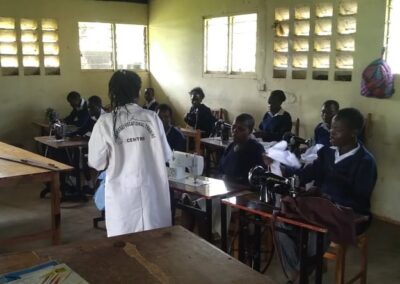
By training 25 disadvantaged youth in high-demand trades such as masonry, tailoring, and hairdressing, this project will directly improve their employment prospects and income-generating capacity. Each trained youth will support an entire household, multiplying the project’s impact.
The project contributes to poverty reduction, youth employment, and local economic development in a high-need rural area.
The implementing organisation
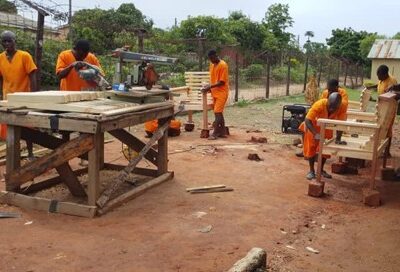
Chebirirbei Vocational Training Centre is a public technical training institution established in 1984 with a strong track record in practical skills training. It offers accredited courses in construction, tailoring, carpentry, automotive technology, ICT, electrical installation, plumbing, and hairdressing. All courses last 12 months, with an average of 35 students per course.
The centre has previously partnered with the KCB Foundation and now seeks additional partners to expand access for the poorest youth.
The envisaged project results
The grant will fund training for 25 highly vulnerable young adults in market-relevant trades such as masonry, tailoring, and hairdressing. Activities include technical training, mentorship, industrial attachment, job placement support, and soft-skills training such as business planning and communication.
The project will improve employability, foster economic independence, and strengthen resilience among vulnerable populations, contributing to poverty reduction and local economic development.
Chance of sustainability
Graduates will have marketable skills to earn sustainable incomes beyond the project period. The training centre will continue to collaborate with government, community stakeholders, and philanthropic partners to maintain access for vulnerable youth.
The centre also generates income through the sale of products and services (e.g., furniture, metalwork, agricultural products, and technical services), which helps cover operational costs and strengthens long-term sustainability.
Project costs
Total project cost is KES 700,000 (€4,600), excluding teacher salaries covered by the government. Costs include student selection, training materials, examinations, industrial attachments, job placement support, and monitoring.
The centre will contribute KES 100,000 (€600). External funding of KES 600,000 (€4,000) is requested to ensure full participation of the 25 vulnerable youth.

Dear visitor,
We are grateful that you are willing to support us with a donation!
Please fill in the fields below and push the button PAY to transfer the amount by iDeal.